
Microbiome
nourishing digestive health to boost energy and immunity


then God said, “Let there be microbes.”
The stomach is the second brain. It houses the root of our intelligence derived from what we eat and influences the health of all organs and body systems. This is the perfect season to honor the gut, increase awareness of its power over our lives and become more conscious consumers.
Life is a terrestrial and cosmic dance that blends the micro with the macro to create a dynamic sensory experience. The stomach is symbolic of this phenomenon because it’s the home of transformation. Embodying the fire element, the digestive system governs metamorphosis as it processes substances from our external world into another form.
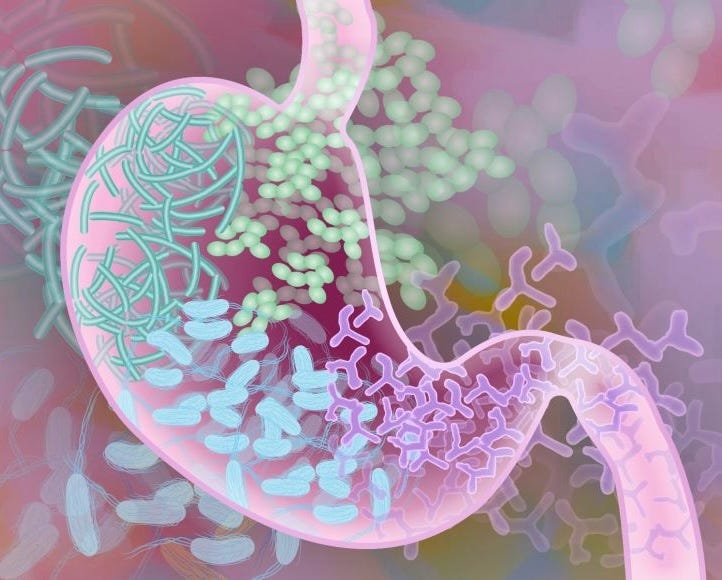
The gut microbiome is a dynamic community of microorganisms living in the lower intestine. There are thousands of bacteria in the colon. Everyone’s microbiome is different according to factors that may be genetic or environmental. There’s a party happening in the stomach with acid, enzymes and these tiny creatures who determine our ability to absorb nutrients from food.
Even though it’s cold outside, I’ve enjoyed drinking smoothies because they are like liquid meals. You can pack so many different foods in a single cup and digest it all at once. That’s why juice and smoothies are extremely beneficial for increasing gut biodiversity, which is important because having a limited variety of microorganisms in the digestive tract leads to fatigue, chronic illness, mental and emotional blockages. If you’re looking for something warmer than a smoothie—soups, stews and broths are a good alternative that allow for the combination of a wide variety of vitamins and minerals.
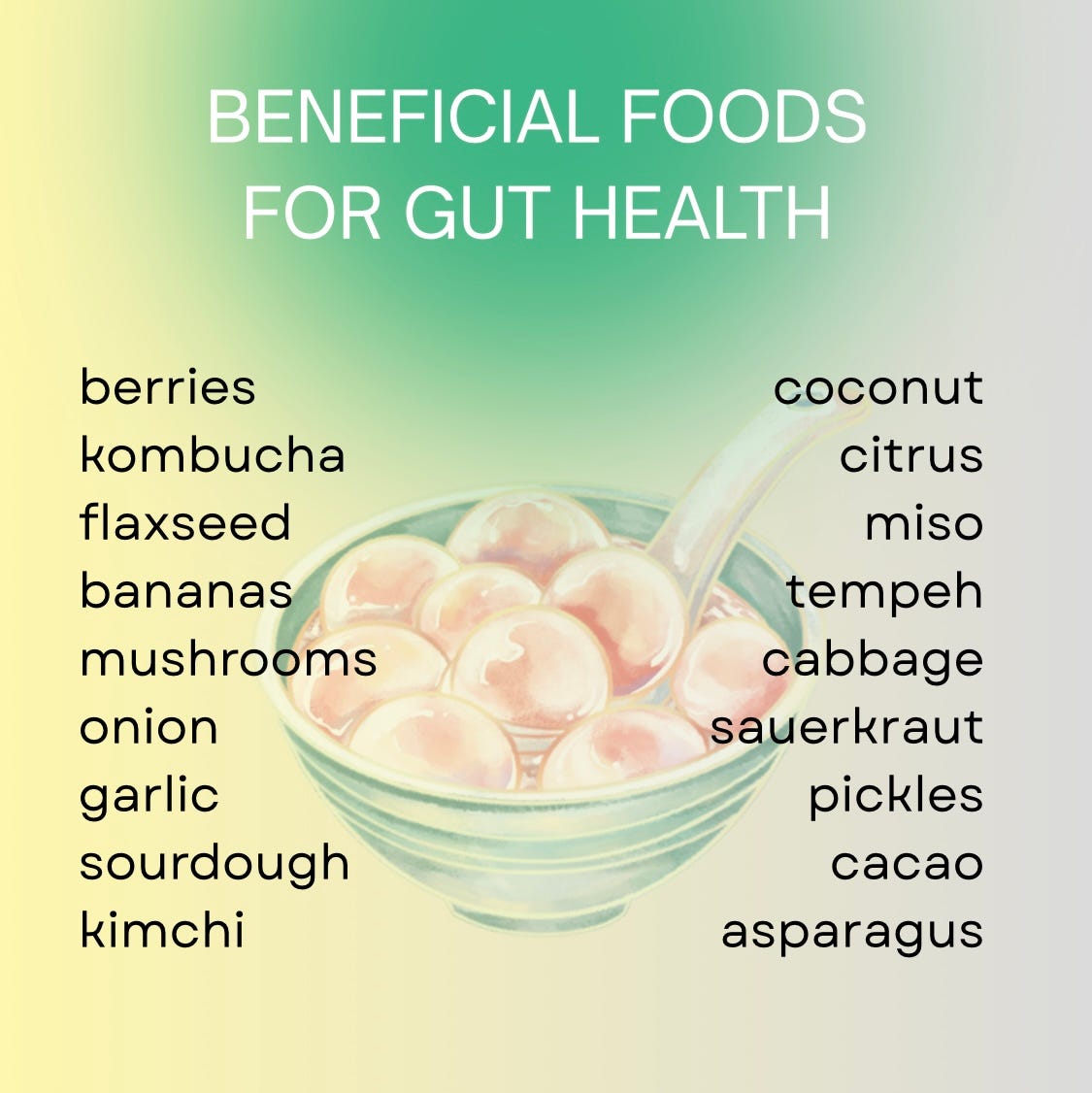
Beneficial Foods for Gut Health
Nourishing our gut health brings lots of benefits for boosting energy levels, strengthening immunity against sickness, cleansing the blood and more.
Enjoy these foods and drinks to introduce delicious prebiotics and probiotics that add fuel to the body and help facilitate healthy digestion. They also contain antioxidants and anti-inflammatory compounds that contribute to repairing vital tissues, supporting hydration and maintaining the balanced flow of fluids.
Berries, such as blueberries, blackberries, raspberries, strawberries and açaí all contain high amounts of antioxidants that prevent cancer and chronic disease.
Kombucha is a fermented drink that provides probiotic nutrients. It can be naturally flavored with fruit for more benefits.
Flaxseeds are a mild laxative that support digestion. You can make it into tea or cook with it as an egg substitute.
Bananas, similar to plantains, have mucilage properties that protect organ tissues and contribute to the smooth assimilation of food.
Mushrooms have prebiotics, which are basically food for probiotic organisms to consume—creating a full ecosystem in the gut.
Onions are powerhouses of anti-inflammatory compounds that not only support digestion, but also boost immune and respiratory health.
Garlic is cleansing and nutritive with prebiotic compounds that increases flavor when cooked with other spices.
Sourdough is fermented bread that is a much better option than many commercial breads with artificial chemicals.
Kimchi is a traditional Korean dish with fermented vegetables, including cabbage, radishes, garlic, ginger and scallions.
Coconut is super hydrating and nourishing with essential nutrients for developing gut biodiversity.
Citrus is high in vitamin C and antioxidants that create a happy friendship between the digestive and immune systems.
Miso is a traditional Japanese soup made from fermented soybean paste that includes seaweed, onions and tofu.
Tempeh is an Indonesian soy-based food high in protein, often enjoyed by plant-based folks who are looking for something that tastes like meat but has more health benefits.
Cabbage is a delicious green vegetable with prebiotics that can be steamed, sauteed, added raw to sandwiches and cooked into soups and stews.
Sauerkraut is fermented white cabbage that can be incorporated into various dishes as a topping or key ingredient.
Pickles are cucumbers that have been fermented in vinegar, boosting gut health with important probiotic bacteria.
Cacao is a tropical fruit similar to coffee that is traditionally processed into chocolate, containing many benefits for the digestive, immune and nervous systems.
Asparagus is a green vegetable high in antioxidants with prebiotics that serves well as a sautéed element in diverse dishes.
Ancient wisdom lives within you,
Alexis Akua