
Lab Moments
highlights from our gatherings with natural dye, fiber and painting


Color Lab is a natural dye and paint workshop. In this collaborative creation space, the healing powers of nature come alive as we craft unique designs on fabric with plants. In our approach to food as medicine, we explore the health benefits and cultural significance of food, ways to ethically source our food and how to transform it into art.
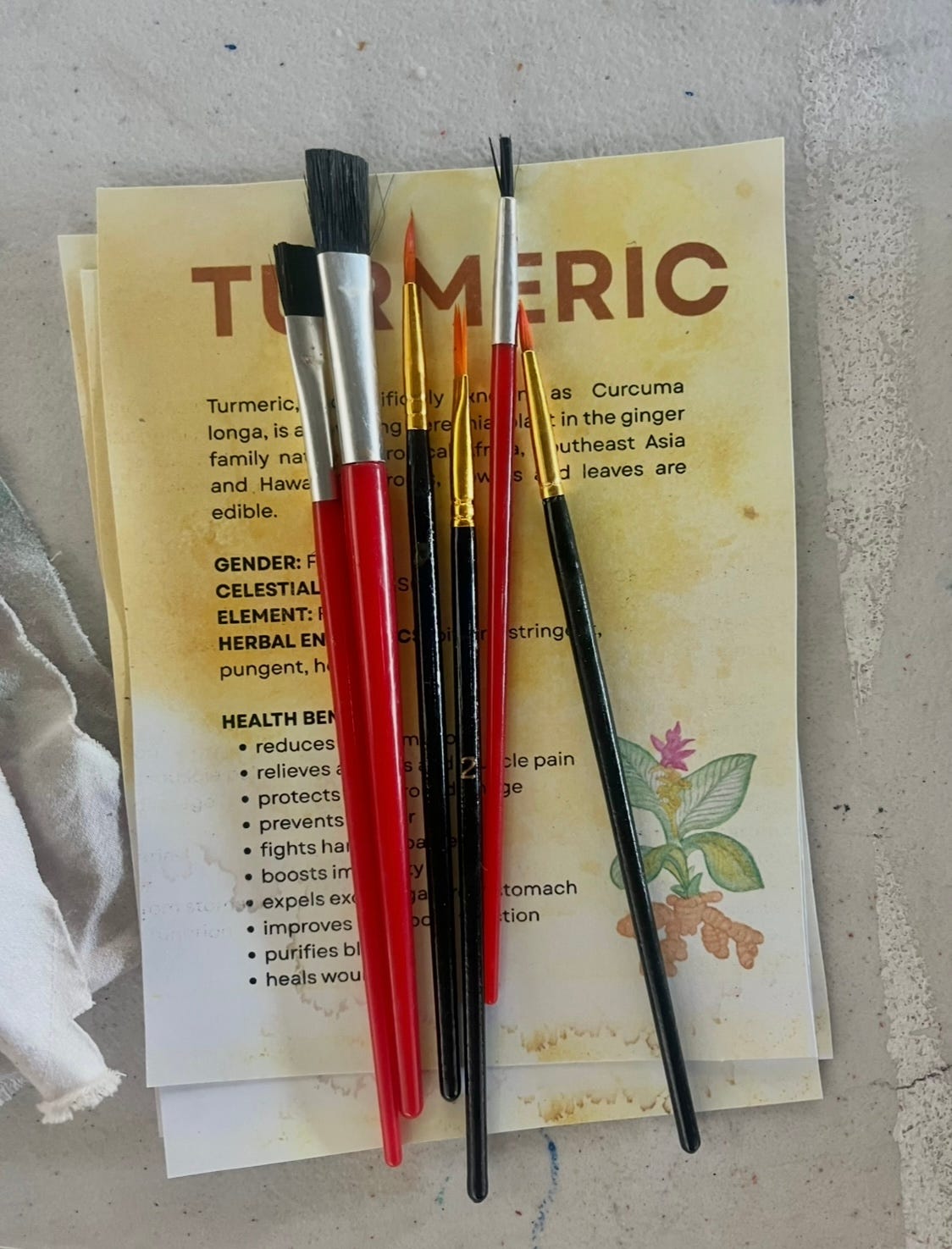
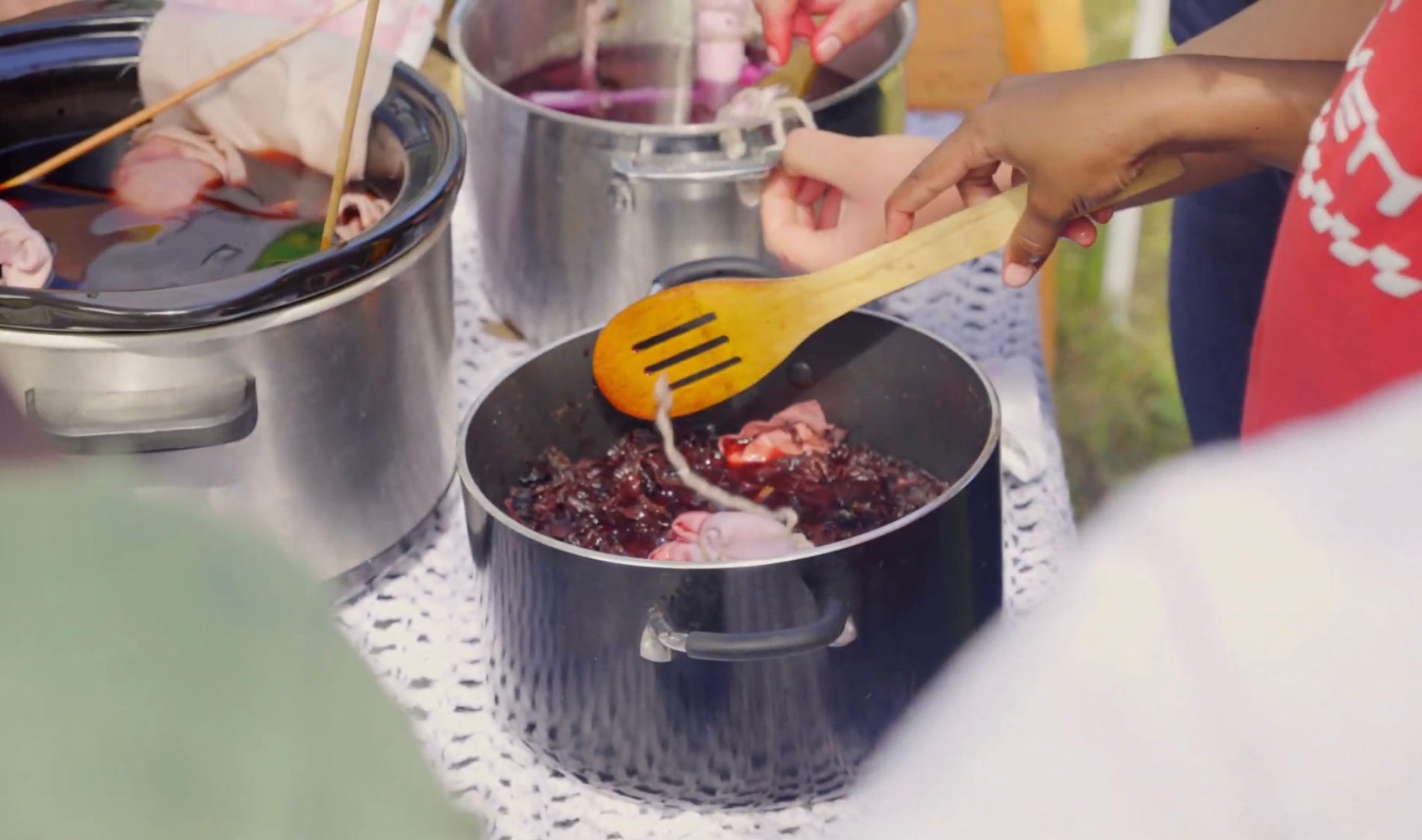
This is a traveling event series that seeks to bring the ancestral tradition of color-making to global communities. In Color Lab, we enjoy the medicinal magic of plants in the form of herbal teas that contain the same ingredients. Last weekend, we gathered at 621 Gallery during the Black History Month Exhibition to explore turmeric as a yellow dye while drinking golden milk and painting with a variety of colors from handmade ink.
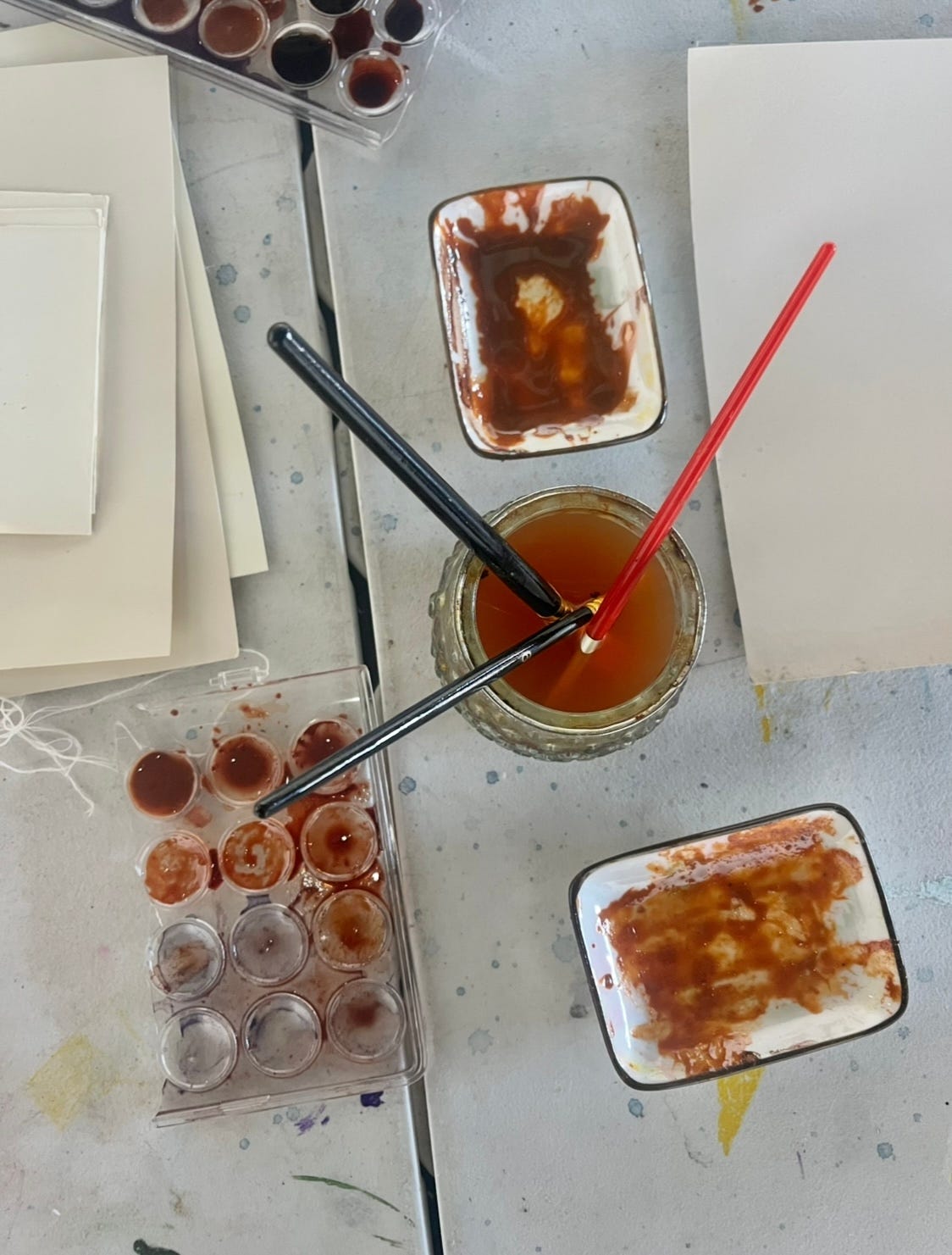
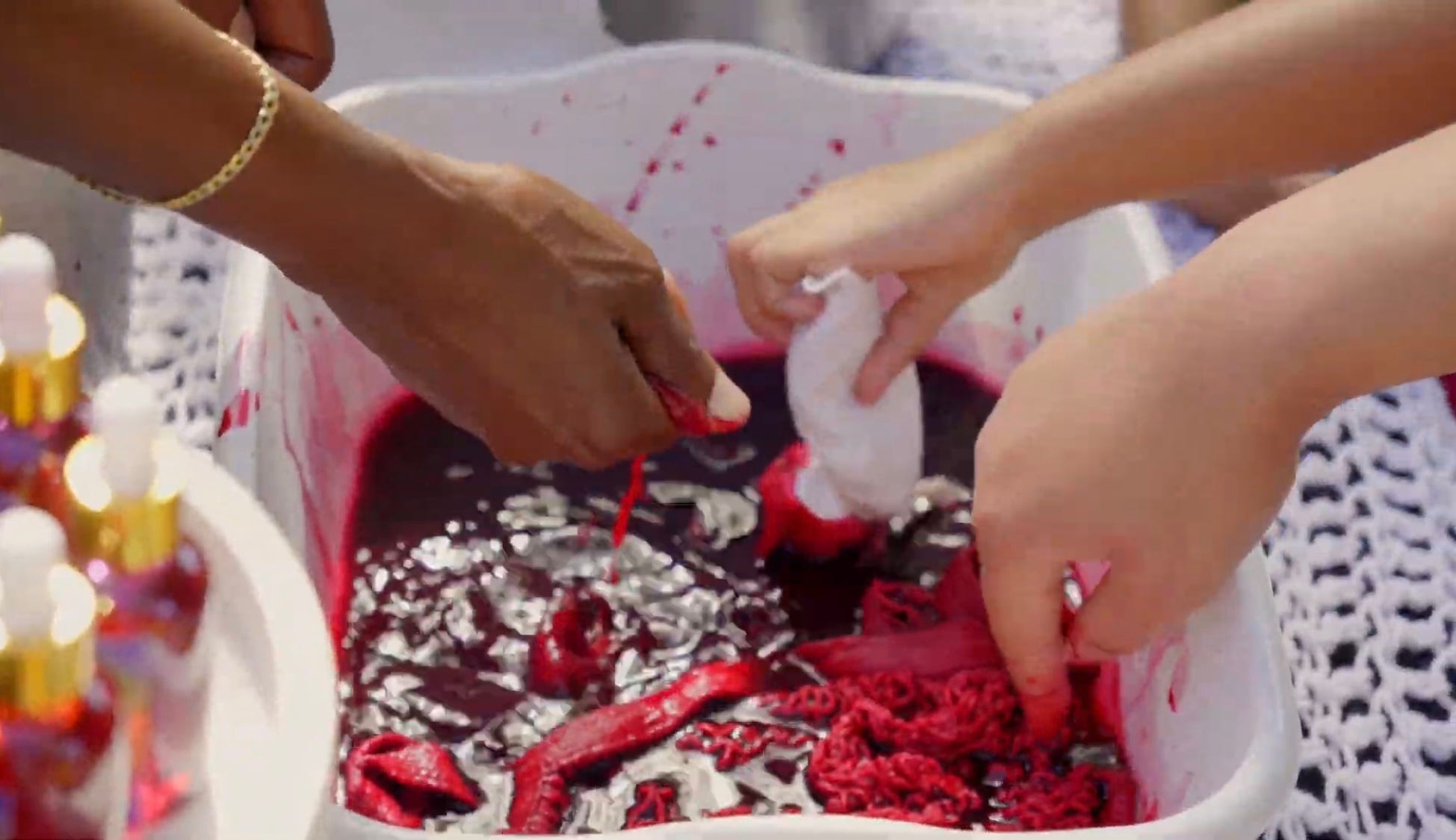
I started this art space because in high school, I hated science class. It was boring, monotonous and detached from life. When I began stewarding land on urban farms and discovered natural dye, a world of possibility uncovered the historical connection between art and science. All of a sudden, I fell in love with science. My art practice became a kitchen lab with boiling pots of carrot juice, fizzing jars of baking soda and hibiscus tea, and cotton swatches immersed in cooked dragon fruit.
Making art with natural pigments is ancient. Scientific experimentation is like writing a poem. It activates our creative intelligence and problem solving skills, allowing our intuition to blossom. I love color because it’s symbolic and spiritual. It influences us on a psychological level and adds beauty to our lives.
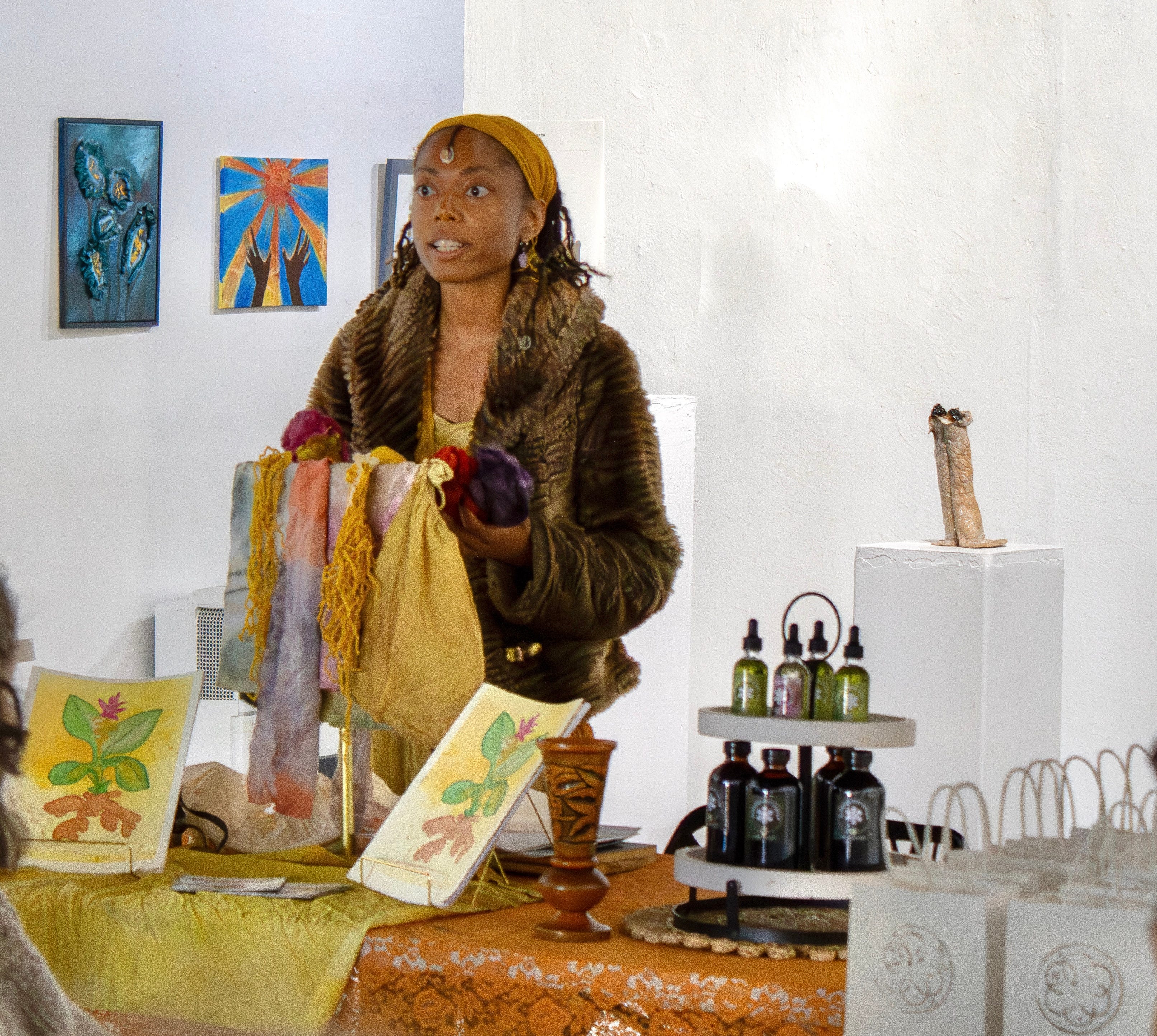
In the recent Color Lab, I shared wool harvested from sheep who are raised at High Hog Farm in Georgia. It was dyed with blue from indigo leaves, pink from cochineal bugs, red from madder root, yellow from marigold flowers and purple from logwood bark. We did a sensory color activity with the wool, exploring how we engage with hues, textures and living material. Color comes from creatures who have thoughts, emotions, breath flowing through their lungs and blood pumping through their veins.
It’s important to acknowledge that everything is alive. Not only do all things have consciousness according to indigenous cosmology, but it also has medicinal properties and health benefits generously gifted to us by Mother Nature to improve the quality of our sacred time on this planet. Whenever we gather in the lab, I like to share these quotes:
“Indigenous people are very scientific—it’s just that our science includes the heart.”
–Jonathan Ferrier, Indigenous ethnobotanist
“Indigenous knowledge is relational; it comes from relationships with the land, the animals, the plants and the ancestors. It includes the heart as well as the mind.”
—Leroy Little Bear, a Blackfoot scholar
My favorite part about Color Lab is when we share our beloved plants and ancestral botanical histories. I cherish the hibiscus plant my mom brought home from the nursery, the two crepe myrtle trees she inherited from my granny when she died, the ginger ale my other grandmother always drank, the fields of peanuts I frolicked across on my family’s farm, the sweet potato pies my aunts cook every year, and the delicious oranges that were planted by my great-grandparents.
These memories are special because they connect us to the Earth through the people we know and love. This is the original way of existing and relating to one another. Plants speak through us and choose us as companions to deliver messages and facilitate healing. When we start thinking and talking about a plant or animal more often, they enter our field of awareness and become more present in our lives.
From an environmental perspective, working with natural pigments in art, food and science contributes to building a sustainable future with less waste and more imagination. In ancient times, paintings were made with natural pigments and clothes were always crafted from natural fiber. The widespread use of synthetic material is very recent in history. As a result of industrialization, it has only lasted a short time, even though it has caused unprecedented pollution and destruction in the soil, water and air.
This is why we must return to our roots of living in alignment with the Earth, Sun and Moon. There is a global movement happening of more people around the world remembering the value of native wisdom. Its home is not in the museum. You can find it there, but it’s ultimately embedded in our lineages as the same wisdom that’s passed down in our families.
I enjoyed sharing space with community last weekend and I look forward to future labs. Join us virtually or in person with an open mind and creative heart. You will receive an herbal gift to take home! Stay tuned for updates.
Ancient wisdom lives within you,
Alexis Akua